


15 Hours a Week for Instagram? Never Again.
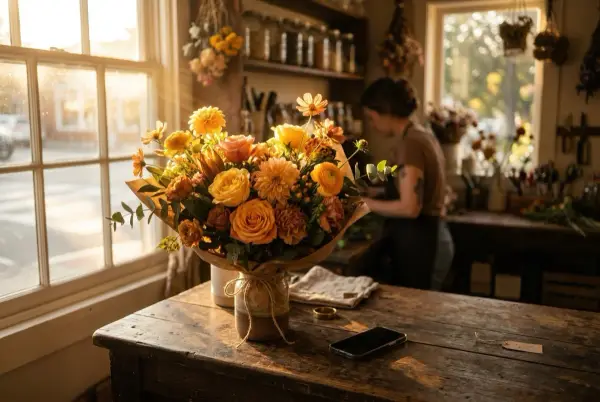
inpixly Team 6 minLast Thursday, 2:23 PM. I'm sitting in a cafe in Salzburg, across from me a florist. Her name is Karin, she's been running her shop for eleven years. On her phone, she shows me her Instagram feed. Beautiful bouquets, perfect light, three posts per week. It all looks like she has a marketing team.
"When do you do all this?" I ask.
She laughs. "I don't anymore."
Karin takes a photo of the daily bouquet in the morning. Sends it via Telegram. Ten minutes later, she has a finished post with text, hashtags, and an optimized image. She taps Approve. That's it.
She's been posting more consistently than in the eleven years before. Combined.
The Real Problem with Instagram
Instagram isn't hard. Instagram is annoying.
Not taking the photo — that's quick. But then: Write the text. Rewrite it. Rewrite it again. Search for hashtags. Crop the image. Pick a filter. Try a different filter. Publish. Notice a typo. Edit again.
45 minutes. For one post.
At three posts per week, that's over two hours. Calculate your hourly rate. At 80 euros, you're at 720 euros per month — for something that feels like a chore. No wonder most people eventually stop. Not from lack of interest. From exhaustion.
Scheduling Solves the Wrong Problem
Buffer, Later, Planoly — nice tools. They handle the timing. You schedule your posts for Thursday at 11, and they go out. Great.
But who wrote the text? You. Who edited the image? You. Who spent half an hour googling hashtags? You.
Scheduling is the dishwasher that puts the clean plates on the shelf. You still have to wash them yourself.
What changed Karin's Instagram wasn't better timing. It was handing off the entire process — from the raw idea to the finished post. The complete workflow behind it is explained in detail in the automation guide.
What Posting to Instagram Automatically Really Means
Not scheduling posts in advance. Handing off the entire job.
You provide the spark — a photo, a keyword, a voice message. The system delivers the post: text in your tone, image in your style, hashtags for your niche. You approve or change a word. Done.
Sounds like losing control? It's the opposite. Karin's posts sound more like her today than before. Because at 10 PM on the couch, every text used to sound the same — tired, rushed, half-hearted. Now it sounds like Karin on a good day.
The trick: The system learns your style. Not generic marketing-speak, but your word choices, your humor, your way of telling stories. After two weeks, nobody can tell that AI is involved.
A Wednesday with Automation
7:08 AM. Karin is in the shop, the first delivery just arrived. Ranunculus, fantastic colors. She takes a photo. Three seconds. Sends it via Telegram.
7:31 AM. Her phone buzzes. Preview: Instagram post with an optimized image, text that sounds like her, and hashtags that work in the florist niche.
7:32 AM. She taps Approve. First coffee.
10:00 AM. The post is live. 23 likes in the first hour. A customer writes: "Are the ranunculus still there? I'll come by."
Total effort: under one minute. That customer would never have called without the post.

Why the Image Makes the Difference
On Instagram, the image decides whether someone stops or scrolls past. That happens in 0.3 seconds. The text comes after.
That's why a scheduling tool isn't enough. You need a system that understands the image too. That knows your framing. That knows whether you work clean or warm. That optimizes your photo without distorting it.
Karin sends a phone photo under neon light. Back comes an image that looks like a photographer took it. Same bouquet, same shop — but the way it would look in the best light. And when you also serve LinkedIn with the same input, you automatically get a second post in a different tone.

The One Thing You Shouldn't Automate
Answering comments. Reading DMs. Saying thank you when someone shares your bouquet.
That's the human part. The part that builds relationships. No system in the world should take that over — and no good system tries to.
Automation handles the grunt work: text, image, hashtags, posting. So you have time for what a machine can't do — having real conversations.
Automate three posts per week. Then invest the saved two hours in comments. That's the combination that works.
The Math Nobody Likes to Hear
Three posts per week. 45 minutes per post. 48 weeks per year.
Manual: 108 hours. At an hourly rate of 80 euros: 8,640 euros per year. For Instagram.
Automated: Under 10 hours per year. The rest goes back into your business. Or your life. What other options like freelancers and agencies cost is broken down in the cost comparison.
Karin saved 98 hours last year. She didn't measure the time. But for the first time in eleven years, she didn't spend a single evening stressed about Instagram.
The Difference Between Having To and Wanting To
That's the real change. Not the time savings. Not the better images. But the feeling.
Karin doesn't hate Instagram anymore. She sends photos because she wants to — not because she has to. Sometimes three a day, sometimes none. The system waits patiently.
Posting to Instagram automatically doesn't mean unleashing a robot. It means handing off the parts that drain you. So the parts that are fun can be fun again.
Frequently Asked Questions
Can you really fully automate Instagram posts? Yes, from image optimization to text to publishing. You provide the raw photo and an idea — the system creates a finished post in your style. You just approve it.
What's the difference between scheduling and automation? Scheduling tools like Buffer or Later publish your posts at a planned time. You still have to create the text, image, and hashtags yourself. Automation handles the entire process — from idea to finished post.
Don't automated posts sound generic? Not when the system learns your style. After one to two weeks, the AI recognizes your word choices, your humor, and your tone. The results sound like you on a good day — not like a marketing template.
How much time do I save with Instagram automation? At three posts per week, you save about two hours weekly. Over a year, that's over a hundred hours you can invest in your business or your life.