


More Matches, Zero Effort — Is That Actually Possible?
inpixly Team 6 minDaniel, 33, architect from Dusseldorf, showed me his Bumble profile. Good guy. Funny. Good-looking. His profile: A selfie with sunglasses. A photo where you can't pick him out of four buddies. A landscape shot from his last vacation — without him in it. Bio: "Spontaneous and adventurous."
Spontaneous and adventurous. That's on roughly seventy percent of all male dating profiles. It's the bio version of vanilla ice cream: Not bad. But also not the reason someone stops scrolling.
Daniel got two matches per week. Not zero, but for someone who fills rooms in real life, that was frustratingly few. The problem wasn't Daniel. The problem was his profile.
The Three Seconds That Decide Everything
The average Tinder user needs less than half a second for the swipe decision. That's not an exaggeration. That's the reality of an app optimized for speed-dating in your pocket.
In that half second, it doesn't matter that you cook well. Not that you speak three languages. Not that you're the funniest person in every room. What matters is what's on the screen. Period.
Is that unfair? Absolutely. But it's the game you're playing when you open a dating app. And those who know the rules can use them.
Why Most Profiles Are Invisible
The Tinder sameness looks the same everywhere: mirror selfie, group photo, landscape. Plus a bio that's either three emojis or sentences you'll find on every other profile.
The problem isn't that these profiles are bad. They're mediocre. And mediocre on a platform with thousands of options means the same thing as invisible.
Larissa, 29, marketing manager from Berlin, put it this way: "When I see a profile and think 'Yeah, okay,' that's a no. A match needs an 'Oh, he's interesting.' And that happens with maybe every twentieth profile."

What Turns "Okay" into "Interesting"
Two things: Photos that tell a story. And texts that show rather than claim.
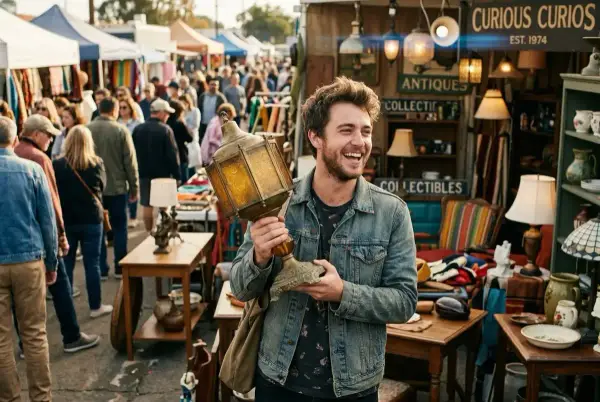
Photos with a story. A picture of you in the kitchen, flour on your forehead, a crooked grin — that says more than any gym selfie. A snapshot from the flea market, you holding an absurd lamp — that sticks. The best dating photos don't show what you look like. They show how you live. And how AI helps with exactly these photos is impressively simple: You send what you have. Back comes what works.
Texts with personality. "Likes traveling and good food" — that's on millions of profiles. But "Got hopelessly lost at a night market in Bangkok and found the best mango sticky rice of my life" — that's a conversation starter. The difference is tiny in effort and massive in impact. Show what you've experienced instead of claiming what you like.
Every Platform Speaks Its Own Language
Tinder isn't Bumble isn't Hinge. Ignoring that wastes potential.
Daniel had two matches per week on Tinder. On Bumble, zero. Same photos, same bio. Why? Because on Bumble, women make the first move — and his bio gave them no reason to. "Spontaneous and adventurous" isn't a conversation starter. "Last Sunday I tried baking croissants. The kitchen looks like a flour explosion, but they were unbelievably good" — you can respond to that.
On Hinge, the combination of photo and prompt counts. A friend of Daniel's had a completely average photo but worded his prompt like this: "I'm convinced the best coffee in the city is in a shop with ugly decor." Thirteen likes in one week. Not because of the photo. Because of the sentence.
The Instagram Factor
What many forget: Most dating apps let you link your Instagram. And almost everyone clicks on it.
Your dating profile has six photos and a short bio. Your Instagram has everything else. And when three posts from 2024 are gathering dust there, that undermines every good impression your app profile built.
An active Instagram is your extended dating profile — a feed that shows you lead a real, interesting life. Maintaining both at the same time doubles your chances without doubling the effort.

The Cheating Question
"If AI makes my profile, doesn't that make me dishonest?"
Alex, 30, physical therapist from Frankfurt, had exactly this concern. Until his sister asked him: "You shave for a date. You wear your best shirt. You pick the restaurant with the best lighting. But when an algorithm improves the lighting in your photo, that's cheating?"
The line is clear: If you're recognizable on the first date, everything's fine. AI doesn't change who you are. It makes visible what you otherwise couldn't show in half a second of Tinder scroll time: your personality, your humor, your life.
No slimmer face. No fake six-pack. No photo in front of the Eiffel Tower when you've never been to Paris. Just you — professionally presented. Like a good suit: It doesn't change your body. It shows it better.
Why a Static Profile Costs You Matches
The algorithms of all major dating apps share one thing: They favor active profiles. Those who regularly update their profile — a new photo, a revised bio — get more visibility. Those who haven't changed anything in three months slowly disappear into digital nowhere.
That doesn't mean you need to overhaul your entire profile every week. But every two to three weeks, a fresh photo or an updated bio — that's enough to keep the algorithm happy and signal that someone active is here.
AI Isn't a Magic Wand
Let's be real: No tool in the world turns a mediocre date into a good one. AI won't make your profile a match magnet if you can't say a word when you meet. And it doesn't replace the work on yourself — your openness, your humor, your ability to listen.
What it can do: Remove the technical barrier. Most singles don't fail because they're uninteresting. They fail because they don't know how to pack what makes them special into six photos and three hundred characters. That's exactly where AI steps in. It takes what you provide and makes it visible.
You invest time in your appearance, your hobbies, your career. Your dating profile — the place where everything starts — deserves the same attention.
Frequently Asked Questions
Can AI really improve my dating profile? Yes. AI optimizes photos (better lighting, better framing), writes individual bios, and adapts texts for different platforms. The result: You come across on screen the way you do in real life.
Is it dishonest to use AI for my dating profile? No — as long as you're recognizable on the first date. AI doesn't change who you are. It makes visible what otherwise gets lost in half a second of scroll time: your personality and your life.
How often should I update my dating profile? A fresh photo or revised bio every two to three weeks. The algorithms favor active profiles and reward regular updates with more visibility.
Which dating app works best with AI-optimized profiles? All major apps benefit, but the strategy needs to be platform-specific. On Bumble, the bio needs a clear conversation starter; on Hinge, the photo-prompt combination counts; on Tinder, the first image decides in under a second.